
My friend Jason recently asked me this, and I don’t think he’ll expect this answer. He’s known a few architects over the years who paint, sculpt, build furniture, play music, you know, people clearly wired with a creative streak. So naturally, it seems obvious: architects are basically artists who happen to design buildings, right?
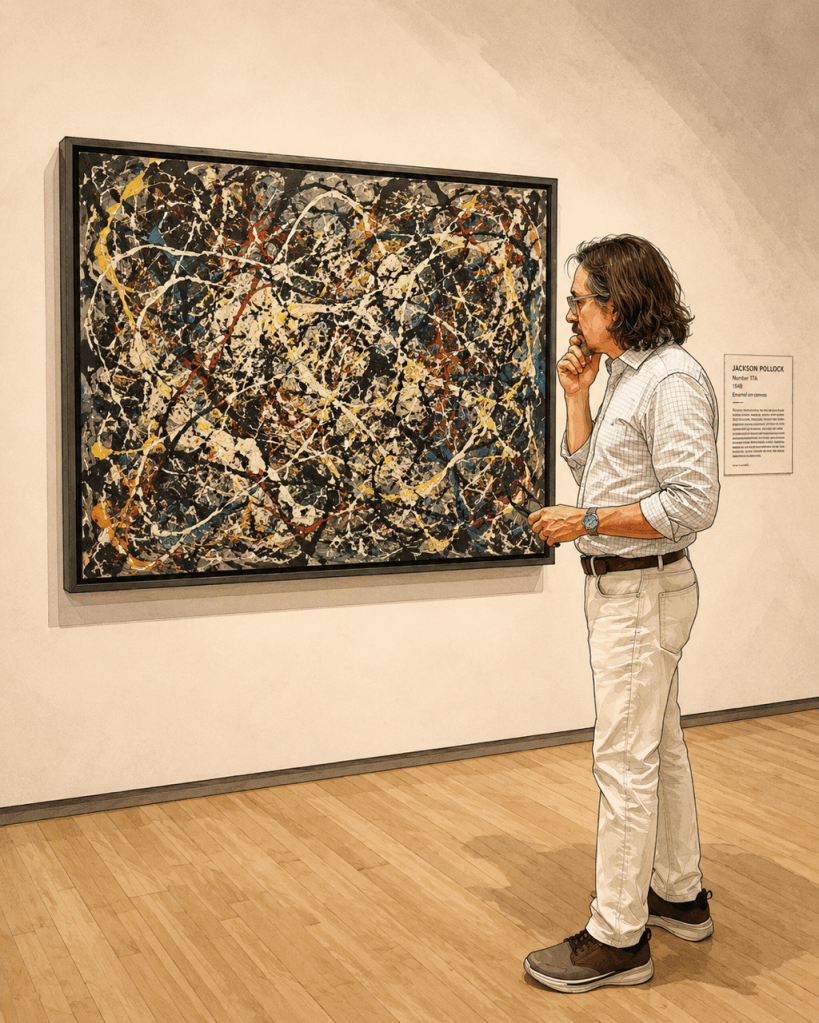
Before I get into my answer, I want to be clear about something: I absolutely believe most architects are creative and inventive people, and I think it’s completely reasonable for someone to look at a building and a painting and appreciate them on what feels like the same level. Both can move you and both can feel like (and usually are) the product of real vision.
Even so, I don’t think architecture itself is art, and I don’t think architects are artists, at least not in the strictly formal sense. I’ll admit that’s a little controversial among fellow architects, but I don’t consider architecture to be an art form, and I don’t consider myself an artist.
What Makes Art, Art?
In my opinion, one of the fundamental attributes of art is that it exists on its own terms. It doesn’t need to serve a function or answer to any other need, it simply exists for itself. Architecture doesn’t have that freedom. A building has to work. It has to shelter, support, circulate people, meet code, survive its site and climate, and serve the people who use it. It might carry artistic elements, but function is a core characteristic in a way that art doesn’t require.
I recently came across an interview with the sculptor Richard Serra that put this better than I could. Serra , architecturally trained but not an architect, builds massive architectural-scale steel sculptures has said that architecture isn’t art precisely because art is purposely useless, and that uselessness is what makes it freer than buildings ever can be. I saw one of his pieces outside the Modern Art Museum of Fort Worth: an enormous curved steel structure with genuinely no purpose beyond existing. It’s not sheltering anyone or organizing space for use. It just is an experience. His most famous piece, Tilted Arc, once installed in New York City, drew the same kind of reaction; architectural in scale and material, but answerable to nothing but itself.
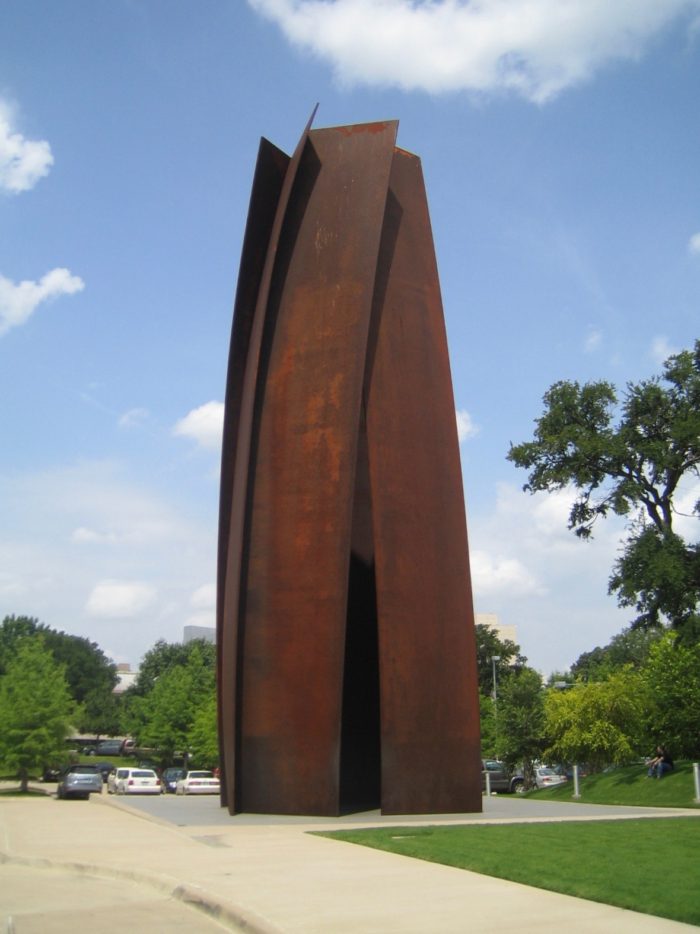
Serra’s work borrows heavily from architecture’s forms and materials. Architecture borrows just as much from art, but borrowing isn’t the same as being.
Form Follows Function
This has been a mantra for many architects. Louis Sullivan, the architect that mentored Frank Lloyd Wright in Chicago, coined the phrase “form follows function.” Function comes first; beauty (actually not necessary) follows from getting the function right, not the other way around. Wright himself later refined it to “form and function are one”, but even that keeps function as an equal partner, not something art can discard.
That said, I’ll admit the line isn’t perfectly clean historically. Michelangelo worked across sculpture, painting, and architecture. Le Corbusier painted throughout his life alongside his buildings. Frank Lloyd Wright cared deeply about pieces that could stand on their own artistic merit, while never losing sight of scale. These weren’t people choosing between art and architecture, they were doing both, and both leaned on each other.
Where I Do See a Kinship
If architecture connects to any kind of art, I don’t think it’s figural or representational work, I think it’s abstract art. Specifically, the kind that isn’t trying to depict anything at all, but is trying to generate a mood or a feeling through pure form, scale, movement, and color.
Mark Rothko is the clearest example I can think of. His color field paintings are enormous, and they’re meant to be experienced up close. Rothko believed you could generate real emotion just through wide fields of color, standing in front of them, letting them fill your field of vision. I’ve been genuinely obsessed with Rothko’s work for the past few years. I’ve gone out of my way to visit at least three different museums specifically to stand in front of his paintings. And that experience… the physical, spatial act of being in the presence of something and having it generate a feeling is exactly what I think architecture shares with art. A well-designed space can evoke a mood the same way a Rothko canvas does: not through representing anything, but simply through how it’s scaled, lit, and proportioned around the person standing inside it.
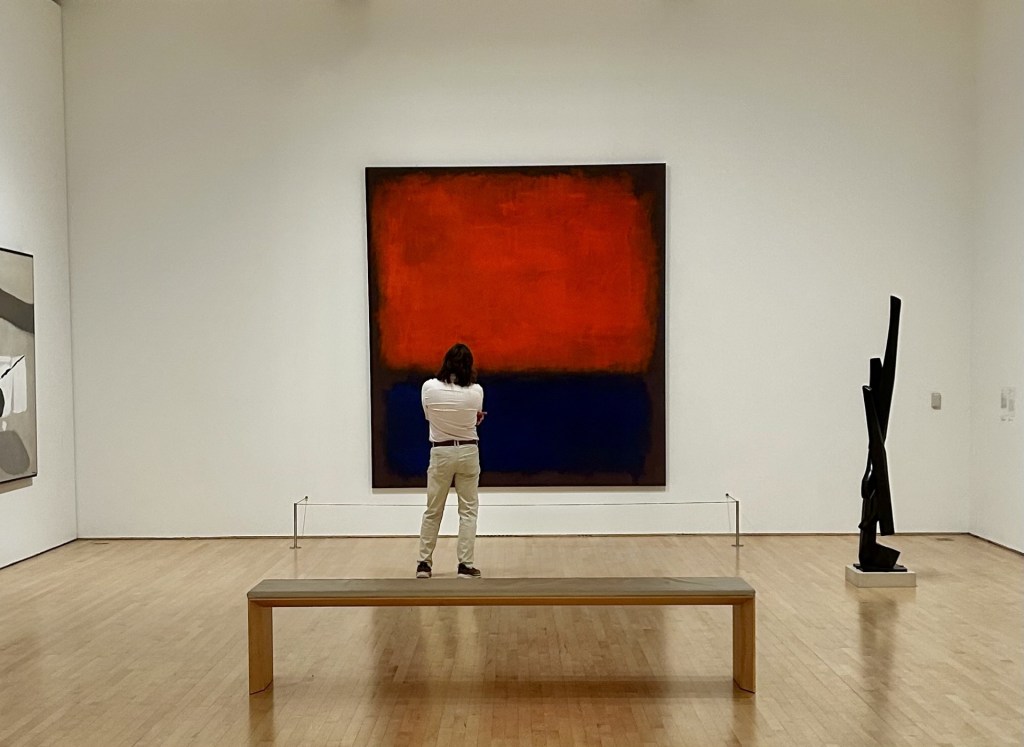
That’s the kinship, as I see it. Not that architecture is art, but that both are capable of working on us the same way through presence and experience rather than through depicting something else.
The Association of Art and Architecture
I think most architects develop their appreciation for art through education. Architecture school is soaked in art and architectural history. You study buildings as reflections of the people and places that produced them. Alongside that, you’re taking studio classes that share a lot with art curriculum: watercolor, model building, furniture design, drawing and painting. Learning to sketch an idea and communicate it visually to a client or a contractor is a real craft, and it has genuine artistic elements running through it.
But here’s what I think actually separates architecture from art most clearly: the business of it. Architecture is a service profession built on contracts, budgets, schedules, and client needs. And I’d argue that’s not incidental… it’s proof the profession isn’t pure art. Look at it from the other direction: when business starts creeping into an artist’s world, when a client, a market, or a commission starts shaping the work, it tends to pull the art away from being a pure reflection of the artist’s intent. Architecture lives inside that business relationship permanently. Art, at its best (maybe), doesn’t have to.
Does It Matter?
Honestly, I don’t think the “architects are artists” idea causes much harm. I know plenty of architects who are genuinely serious artists on the side (painters, musicians, furniture makers.) I know a few doctors and lawyers who are too. Creativity isn’t exclusive to any one profession.
What I do think matters is this: good architects think carefully about how visual and spatial decisions serve people beyond simple function. Thinking beyond whether a room “works” or a layout flows well. Artistic elements woven into a building, even ones most users never consciously notice, can help define a group’s identity or shape how people feel connected to a place. That’s not art for its own sake. That’s design doing its actual job well enough that it starts to feel like a bonus beyond a well functioning building.


Leave a Reply