
That’s actually a little bit of a tricky question because architecture can mean different things depending on what type of architect you’re talking about. A sole practitioner who primarily designs houses may do something quite different from what I do.
In my case, I work on a varying scale of commercial building projects, and a big part of the job is coordinating a lot of different people with differing roles in the process. We (my team and I) are continually working with owners, municipal officials, building departments, contractors, and consultants. I also coordinate with structural engineers, mechanical engineers, electrical engineers, and others to make sure everything comes together into a fully functioning space that works for the clients use.
One advantage of working with a firm is that you’re not just hiring one architect. You’re getting a team. That includes architects, designers, drafters, construction administration staff, and people who help manage documents, construction, and the process as a whole.
A lot of people think architects simply design buildings, and that is definitely our main charge, but we’re also responsible for helping guide a project from an idea all the way through construction and completion. Along the way, there are a lot of regulatory requirements. We navigate building codes, permitting, and sometimes additional requirements tied to grants or funding sources. There can be quite a few hoops to jump through depending on the project.
One of our biggest responsibilities is preparing construction documents and specifications. Those documents have to be clear, complete, and very specific because public projects (most of my work) are typically put out for competitive bidding. It’s important that every general contractor and subcontractor is pricing the same thing, so the documents need to leave as little room for interpretation as possible.
There are also rules and procedures that govern public bidding. There are timelines that have to be followed, advertisements that have to be published, and various requirements that have to be met before a project can be awarded.
And then there’s the paperwork… lots of paperwork. There are contracts, submittals, bonds, insurance documents, change orders, pay applications, and all kinds of project records that have to be managed, recorded and filed throughout the process.
Once construction starts, our role shifts into construction administration. We’re observing the project, answering questions, reviewing submittals, and helping make sure the owner is getting what was intended in the plans and specifications.
When the project is finished, there’s still work to do. We help close the project out properly, make sure warranties are in place, collect closeout documentation, and work with both the contractor and the owner to wrap things up successfully.
As a principal in a firm, there’s another side to the job as well. I have to continue building relationships and pursue new work because the good folks we employ (and their families) are depending on us. We’re always on the lookout for the next project.
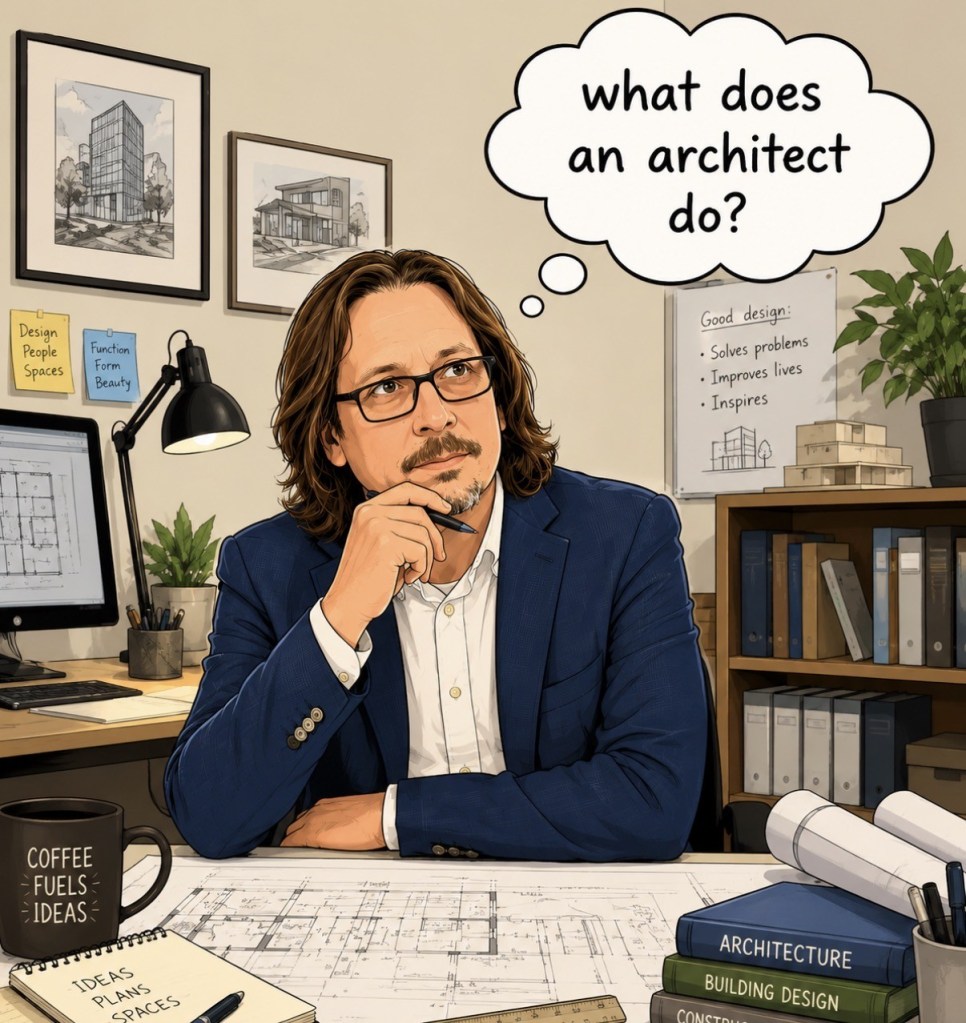
So, when someone asks what an architect does, my answer is that it’s really an entire process. Design is certainly part of it, but we’re also coordinators, problem-solvers, document managers, code specialists, and project administrators. We’re involved from the first conversation about a project all the way through the day the owner moves into the building.
Oh, and currently my team and I are involved with approximately twenty separate projects (just in the Tupelo Office) from the initial programming stages through construction. Whew.
 Dexter Architect
Leave a comment